Guide · Movements
The heart of the watch: understanding mechanical movements
Japanese automatic calibres from the Seiko lineage (made by TMI) and the ST19-03 mechanical chronograph: NH35, NH36, NH34 GMT, NH38, NH70–NH72 skeletons… What really beats under the dial, explained simply, without needless jargon.
9 min read
01
A watch without a battery
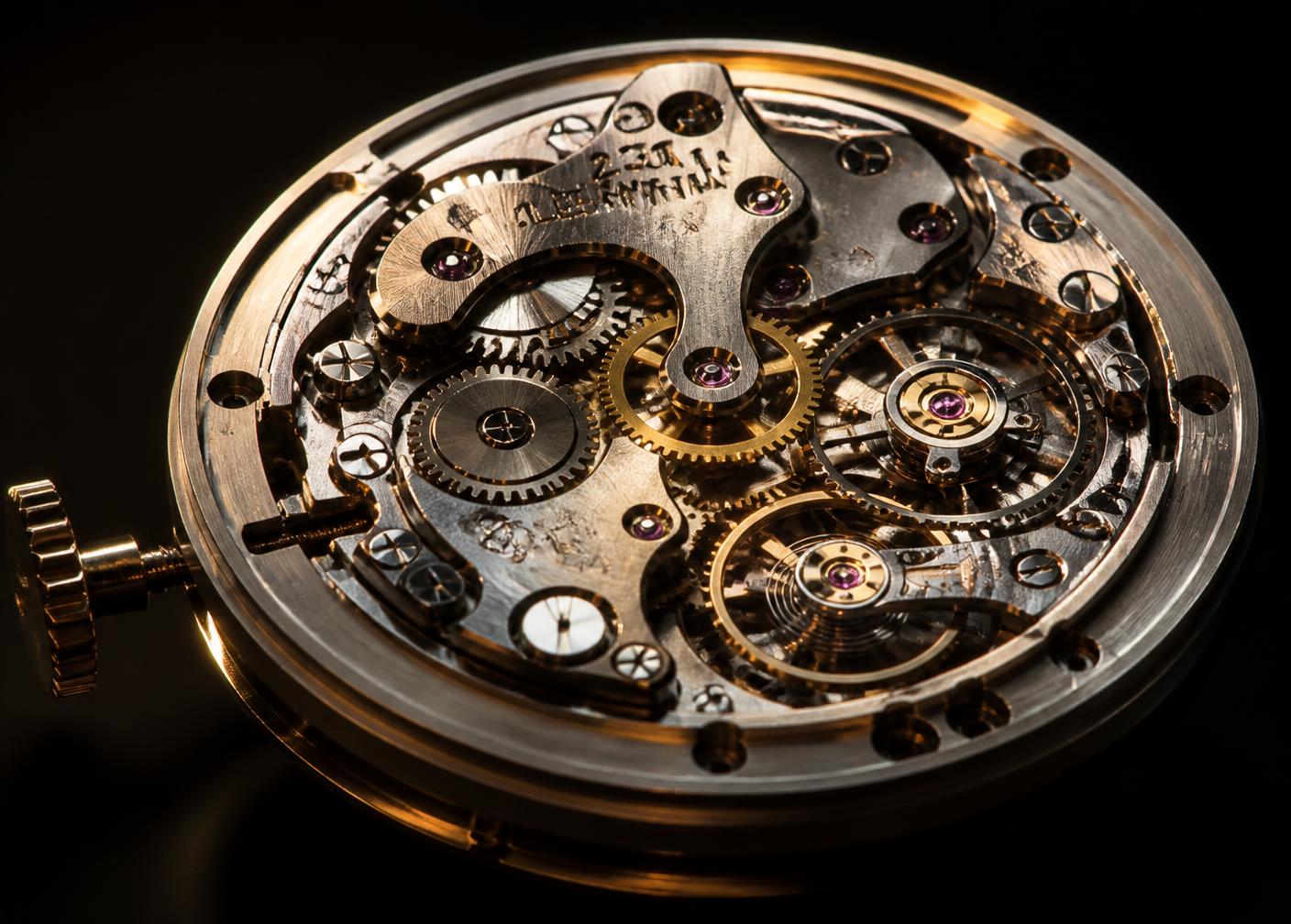
A mechanical watch contains no battery and no circuit. All its energy comes from a coiled spring, the mainspring, which slowly unwinds and drives a train of tiny gears.
So that this energy doesn't escape all at once, a regulating organ, the balance wheel, swings back and forth several times per second. It slices time into equal parts: the famous 'tick-tock'.
02
Automatic or hand-wound?
In an automatic watch, an oscillating weight (the rotor) spins with every movement of the wrist and winds the spring by itself. Worn daily, it never stops.
On a hand-wound watch, you turn the crown a few dozen times yourself. A small daily ritual that many enthusiasts love.
Good to know: an automatic watch left on a table will stop after about two days. Simply give the crown a few turns and set the time again.
03
The NH family (Seiko / TMI): a legendary Japanese base
Derived directly from Seiko's 4R calibres, NH movements are made by Time Module Inc. (TMI), a subsidiary of the Japanese watch group. Made in Japan, NH calibres all share the same proven architecture: automatic and hand winding, hacking seconds for precise time setting, and a robustness that makes them the benchmark for independent brands.
What sets them apart are the functions shown on the dial: date, day, second time zone, visible balance wheel or a fully openworked movement. Here's how to tell them apart.
- Frequency
- 21,600 vph (3 Hz)
- Power reserve
- about 41 h
- Jewels
- 24
- Winding
- automatic + manual
04
NH35: simply the date
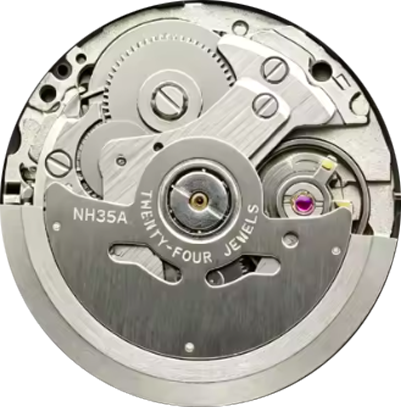
The NH35 is the great classic: hours, minutes, seconds and a date window. Simple and reliable, it suits almost every watch style.
Without a day-of-week display, the dial stays cleaner. It is the versatile choice for anyone who wants the date without another indication.
- Functions
- hours, minutes, seconds, date
- Frequency
- 21,600 vph
- Reserve
- about 41 h
- Jewels
- 24
NH35
Front · dial side
NH35
Back · caseback side
NH35
In the watch
05
NH36: the day and date
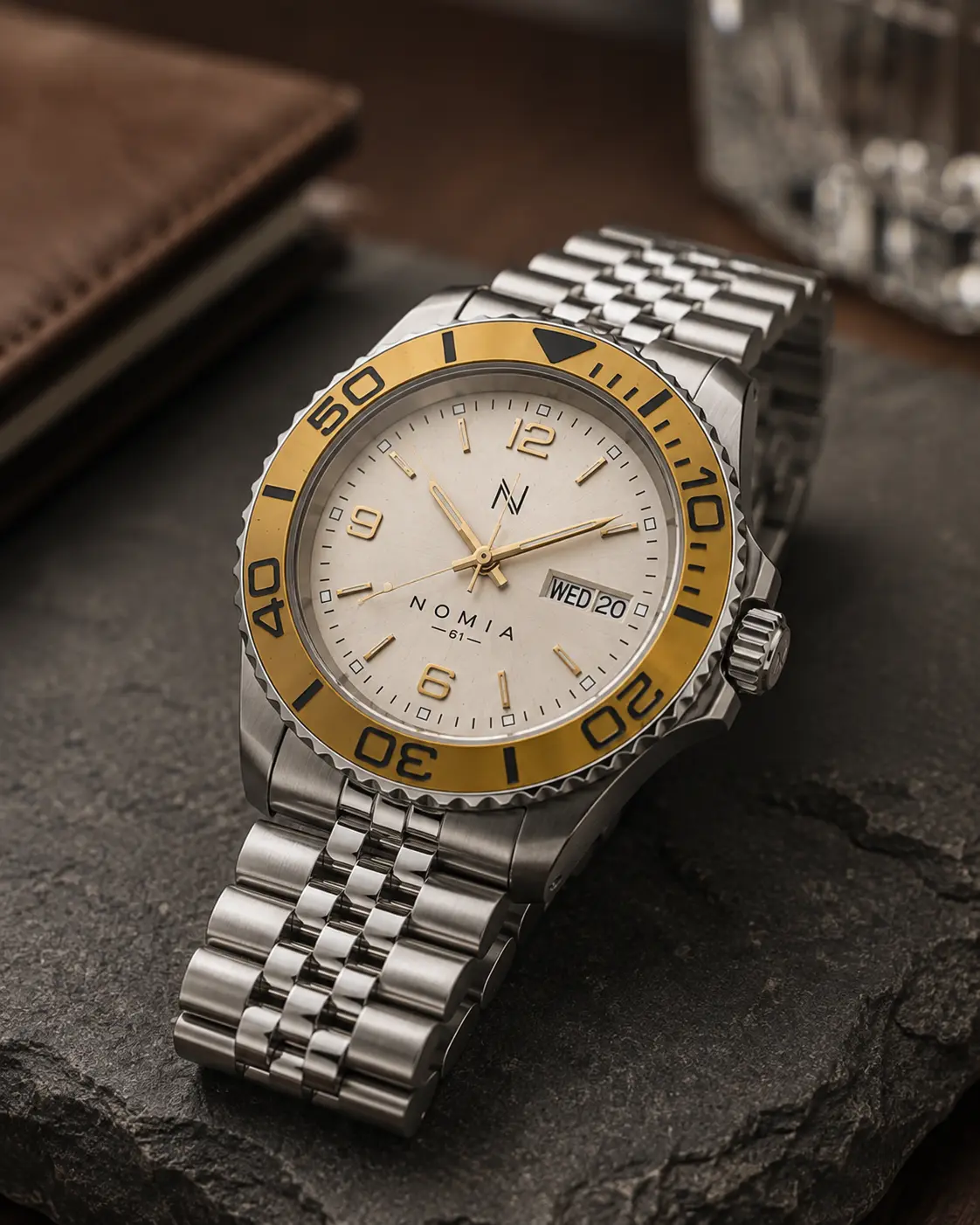
The NH36 builds on the NH35 base and adds the day of the week next to the date. A practical everyday detail, much loved on 'day-date' style watches.
Choose it if you like having both indications in front of you. For a more minimalist dial with the date alone, the NH35 remains the solution.
- Functions
- hours, minutes, seconds, day + date
- Frequency
- 21,600 vph
- Reserve
- about 41 h
- Jewels
- 24
NH36
Front · dial side
NH36
Back · caseback side
NH36
In the watch
06
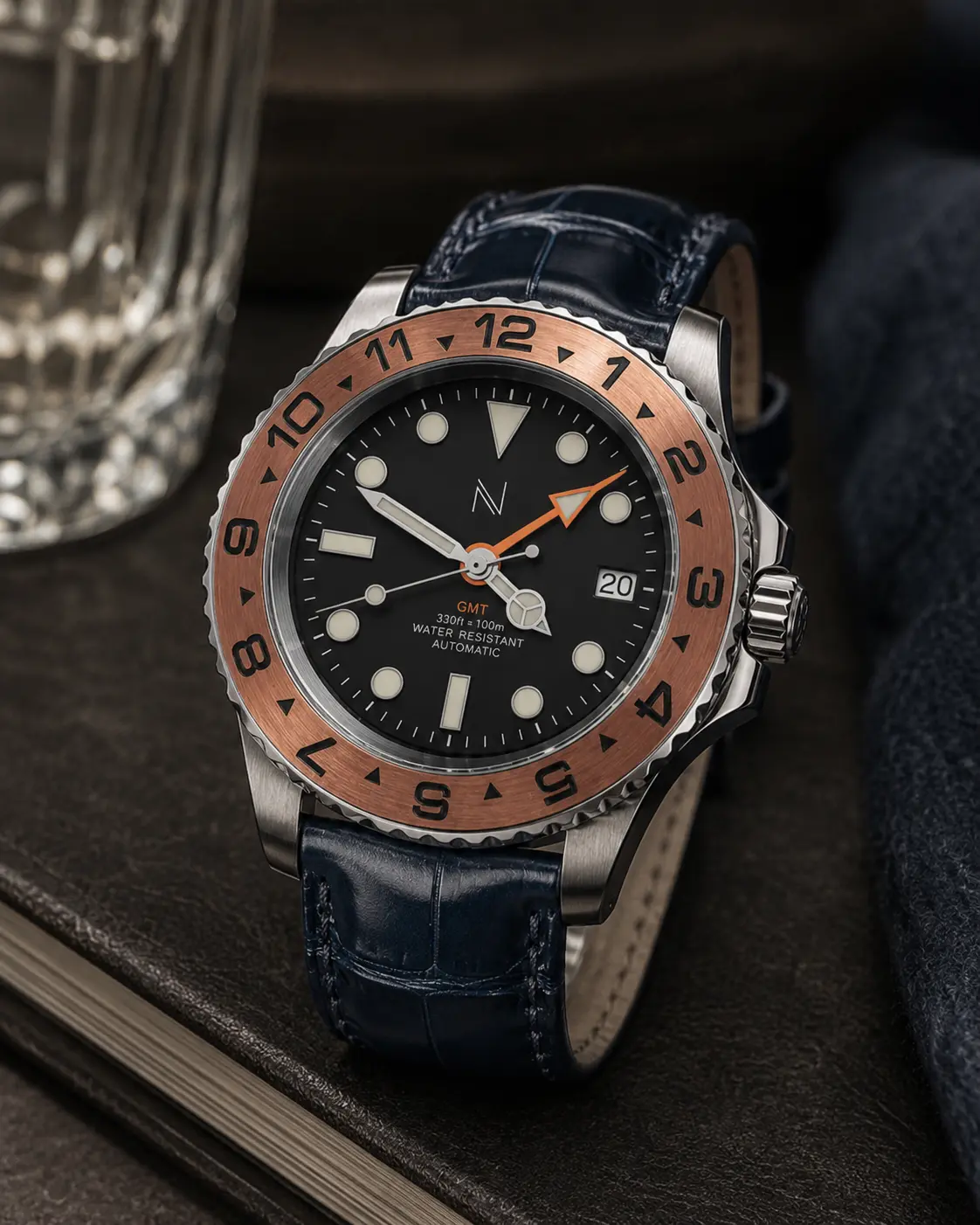
NH34: two time zones on your wrist
The NH34 takes the NH base and adds a fourth hand that circles the dial once every 24 hours. Paired with a 24-hour bezel, it shows a second time zone.
In practice: keep Brussels time on the main hands, and New York or Tokyo time on the GMT hand. Ideal for travellers, or for anyone with family on the other side of the world.
- Functions
- hours, minutes, seconds, 24h GMT, date
- Reserve
- about 41 h
- Frequency
- 21,600 vph
- Jewels
- 24
NH34 GMT
Front · dial side
NH34 GMT
Back · caseback side
NH34 GMT
In the watch
07
NH38: the open heart
The NH38 reveals its balance wheel through an opening in the dial. You can literally watch the watch beat, several times per second.
It has no date, so the crown has no unused position and the dial stays clean. An excellent choice for an elegant watch that shows its mechanics discreetly.
- Functions
- hours, minutes, seconds
- Feature
- visible balance wheel
- Reserve
- about 41 h
- Jewels
- 24
NH38
Front · dial side
NH38
Back · caseback side
NH38
In the watch
08
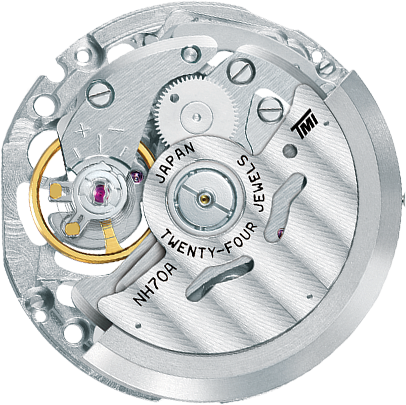
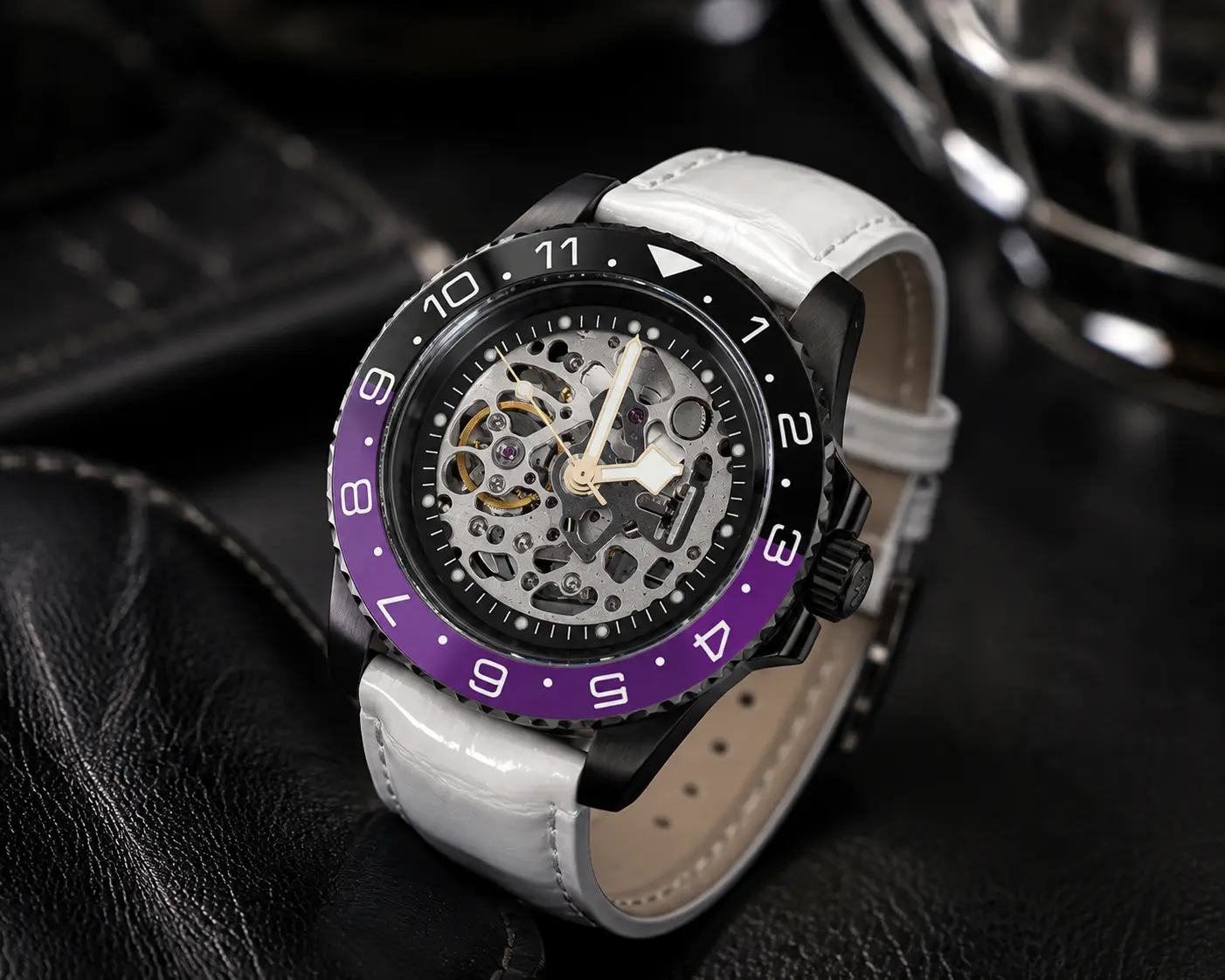
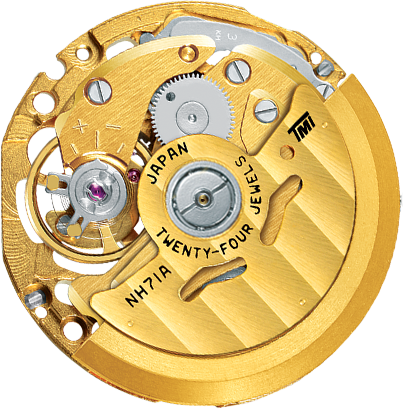
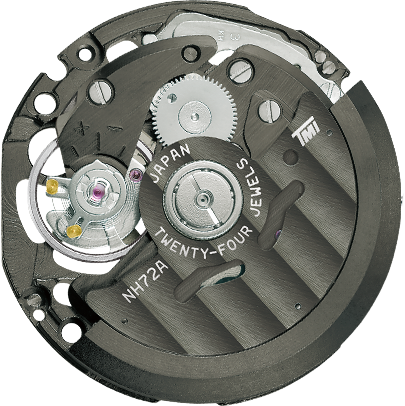
NH70, NH71, NH72: the skeletons
These three calibres are skeletonised movements: the bridges and mainplate are openworked to reveal the gears, mainspring and balance, from both the dial and caseback side.
Their mechanics are identical, only the colour changes: the NH70 is silver for a raw, technical look, the NH71 is gold for a warmer, more classic feel, and the NH72 is black for a modern, understated style.
They're made for skeleton dials: the watch becomes a small window onto its own mechanics.
- NH70
- silver
- NH71
- gold
- NH72
- black
- Functions
- hours, minutes, seconds
NH70
Front · dial side
NH70
Back · caseback side
NH70
In the watch
NH71
Front · dial side
NH71
Back · caseback side
NH71
In the watch
NH72
Front · dial side
NH72
Back · caseback side
NH72
In the watch
09
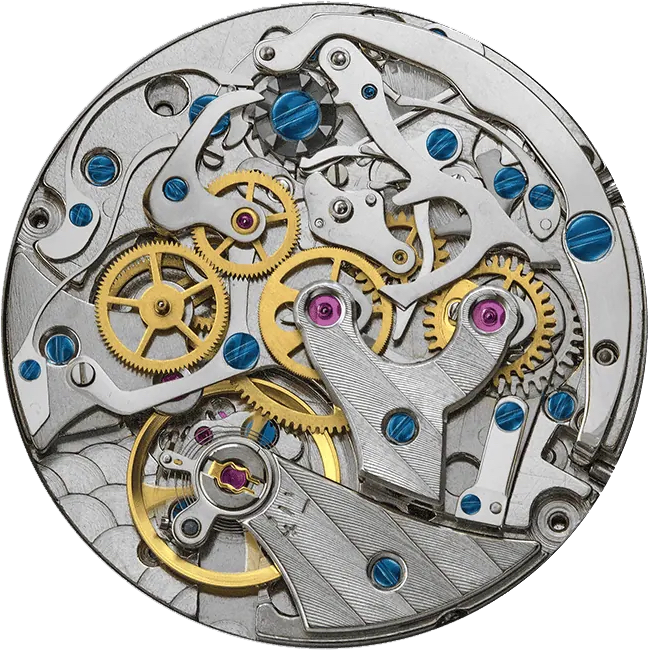
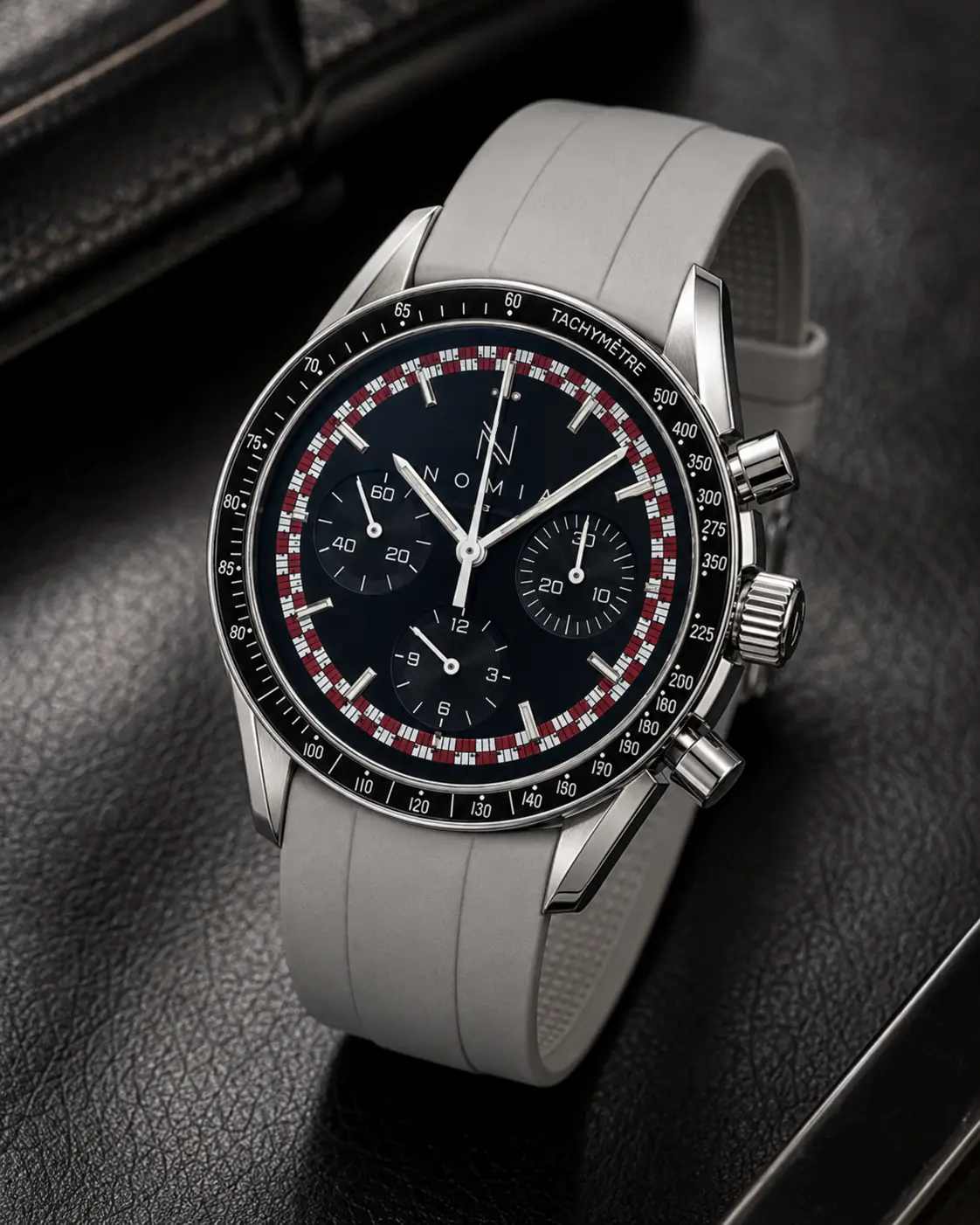
ST19-03: the mechanical chronograph
The ST19-03 is a hand-wound chronograph inspired by a historic Swiss calibre. Two pushers start, stop and reset the stopwatch.
It uses a column wheel, the solution found in high-end chronographs: pushers feel crisp and precise. Without a rotor, it is wound by hand, a small daily ritual.
It is the most complex movement in our catalogue, reserved for the Apex model. Its build time is 3 to 4 weeks.
- Winding
- manual
- Mechanism
- column wheel
- Frequency
- 21,600 vph (3 Hz)
- Power reserve
- about 45 h
- Sub-dials
- small seconds + 30-min counter
- Jewels
- 23
ST19-03
Front · dial side
ST19-03
Back · caseback side
ST19-03
In the watch
10
Why assembly matters as much as the calibre
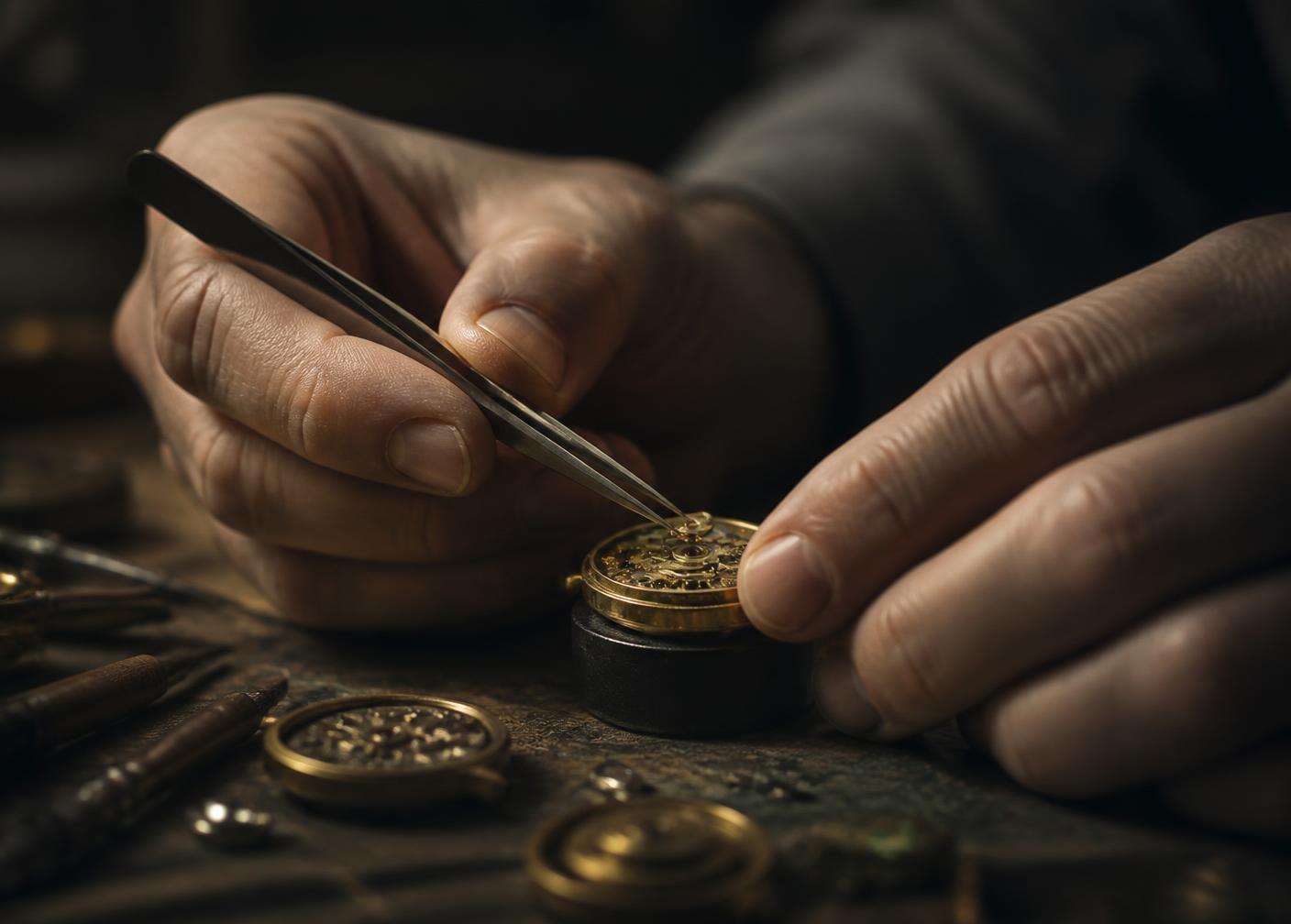
An excellent movement badly fitted makes a mediocre watch. Every NOMIA 61 is hand-assembled in Belgium: dial and hands fitting, casing, timekeeping check.
It's this invisible work that allows every watch to carry a 2-year warranty.
11
Seiko, TMI and NOMIA 61: where our movements come from
The NH34, NH35, NH36, NH38 and NH70 to NH72 calibres are designed and made in Japan by Time Module Inc. (TMI), part of Seiko Instruments Inc., itself a member of the Seiko watchmaking group. They are the versions supplied to independent brands of movements Seiko uses in its own collections.
The NH35 is the technical twin of the Seiko 4R35, the NH36 of the 4R36 and the NH34 of the 4R34 GMT, found in the Seiko 5 Sports, Prospex and Presage ranges. Same architecture, same reliability proven by millions of watches worn every day.
They inherit two historic Seiko inventions: the 'Magic Lever' (1959), which winds the spring in both directions of rotor rotation, and the Diashock shock-protection system, which shields the balance wheel from everyday knocks.
NOMIA 61 is an independent workshop with no commercial ties to Seiko: we choose these movements for their reputation, then each one is checked, regulated and cased by hand in Belgium. The ST19-03 chronograph comes from another maker: China's Seagull (Tianjin), a long-standing specialist of the column-wheel chronograph.
- Maker
- TMI / Seiko Instruments (Japan)
- NH35 ≈
- Seiko 4R35
- NH36 ≈
- Seiko 4R36
- NH34 ≈
- Seiko 4R34 GMT
- Winding
- bidirectional Magic Lever
- Shock protection
- Diashock
Frequently asked questions
What's the difference between an open heart and a skeleton?
An open heart (NH38) only shows the balance wheel through a small opening. A skeleton (NH70, NH71, NH72) reveals almost the whole movement.
Why doesn't the ST19-03 have a rotor?
It's a hand-wound chronograph: a few turns of the crown each day are enough, and nothing hides the mechanics.
Do I have to wear an automatic watch every day?
No. If it stops, a few turns of the crown restart it. A watch winder isn't necessary.
Is a mechanical watch as accurate as a quartz watch?
No, it can gain or lose a few seconds a day. That's normal: the price of a living mechanism with no electronics.
Are NH movements Seiko movements?
Yes: they are made in Japan by TMI, part of the Seiko group, and are equivalent to the 4R35, 4R36 and 4R34 calibres. NOMIA 61 is not a Seiko partner, though: we are an independent workshop that chooses them for their reliability.
What's the difference between the NH35 and the Seiko 4R35?
Technically, no notable difference: same architecture, frequency and power reserve. The 4R35 goes into Seiko watches, the NH35 is offered to independent brands.
Which movement should I choose?
The NH35 for simplicity, the NH36 for day and date, the NH34 if you travel, the NH38 or an NH70/71/72 to see the mechanics, the ST19-03 if you love chronographs.